

• No Consent, No Use: How The Quilox Decision Strengthens Image Rights Protection In Nigeria

    Article By: Adeyinka Abdulsalam, Decency Nkume, Ogooluwa Osilesi A picture of a person mirrors his own image, which is personal to him. It is a clone of an individual. For a business concern to take a picture of somebody, for pecuniary interest, without his consent or authorisation, constitutes a serious erosion of the right of …

    More  →
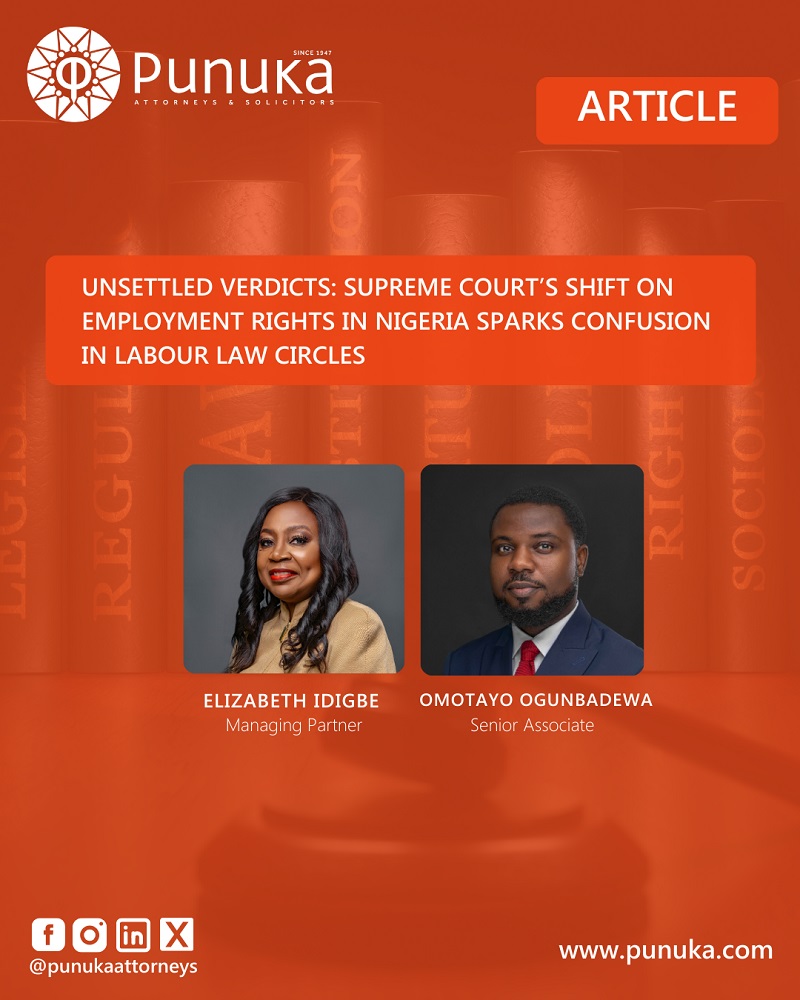
  • Unsettled Verdicts: Supreme Court’s Shift on Employment Rights in Nigeria Sparks Confusion in Labour Law Circles

    Article By: Elizabeth Idigbe, Omotayo Ogunbadewa A recent decision of the Supreme Court of Nigeria has quietly shaken the foundations of Nigerian employment law. In Skye Bank Plc v. Adedokun Adegun (“Adegun”), the apex court appeared to embrace the jurisprudential approach of the National Industrial Court (NICN) in adjudicating wrongful dismissals, adopting an interpretation rooted …

    More  →
  • Tax Tuesday: How Does the New Tax Act Affect SMEs?

    According to the National Bureau of Statistics, Small and Medium-sized Enterprises (SME’s) account for about 48% of Nigeria’s Gross Domestic Product (GDP), making them a vital part of the economy. Although the new tax legislation is intended to increase government revenue, strengthen tax compliance, and encourage investment, it also carries significant implications, particularly for SMEs, …

    More  →
  • The Counterparts Clause: What Every Stakeholder In The Business Community Should Know

    Article By: Anthony Idigbe SAN, Ph.D., Decency Nkume and Favour Obukohwo Introduction Suppose you’ve signed a contract, whether as a business owner, executive, or have reviewed the contents of a contract as a lawyer, company secretary or even as a Judicial officer. In that case, you’ve probably seen this familiar-sounding boilerplate: “Counterparts: This Agreement may …

    More  →
  • Tax Tuesday: Controlled Foreign Company (CFC) Rules & Minimum Effective Tax Rate

    One notable highlight under the New Tax Act is the introduction of Controlled Foreign Company (CFC) rules, which are designed to prevent Nigerian companies from avoiding tax by keeping profits in foreign subsidiaries instead of bringing the money back into Nigeria. Download Full Snippet

    More  →
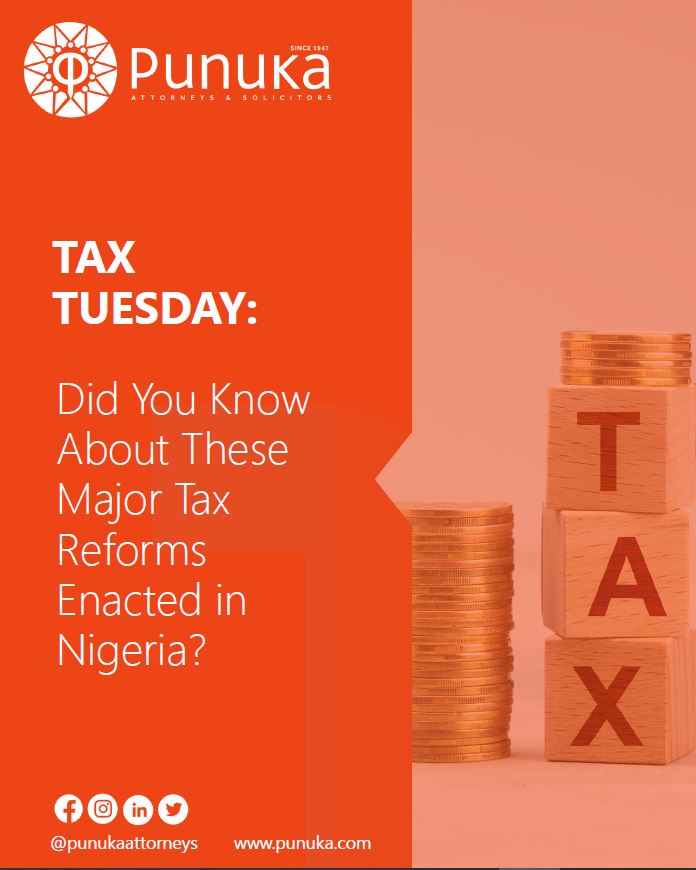
  • Tax Tuesday: Did You Know About These Major Tax Reforms Enacted in Nigeria?

    In June 26, 2025, Nigeria’s Presidency signed into law four significant Tax Reform Bills, including a new Tax Act, aimed at overhauling Nigeria’s tax landscape. The four Tax Reform Bills, now signed into law and collectively known as the Tax Reform Acts, are:… Download Full Snippet

    More  →
  • Tax Tuesday: Key Changes You Should Know in the 2025 Nigeria Revenue Service (Establishment) Act, 2025

    The Nigeria Revenue Service (Establishment) Act, 2025 marks a significant shift in the country’s tax administration framework. The Act formally rebrands the Federal Inland Revenue Service (FIRS) as the Nigeria Revenue Service (NRS), establishing it as the central authority for tax administration in Nigeria. Importantly, this change is not merely cosmetic, the Act empowers the …

    More  →
  • The Nigerian Tax Reform Acts, 2025: An In-Depth Guide for Businesses, Investors, and Taxpayers

    Introduction   On June 26, 2025, President Bola Ahmed Tinubu signed into law four transformative pieces of tax legislation;i. The Nigeria Tax Act (NTA), 2025ii. The Nigeria Tax Administration Act (NTAA), 2025iii. The Nigeria Revenue Service Act (NRSA), 2025iv. The Joint Revenue Board Act (JRBA), 2025 Together, these statutes represent a sweeping overhaul of Nigeria’s …

    More  →
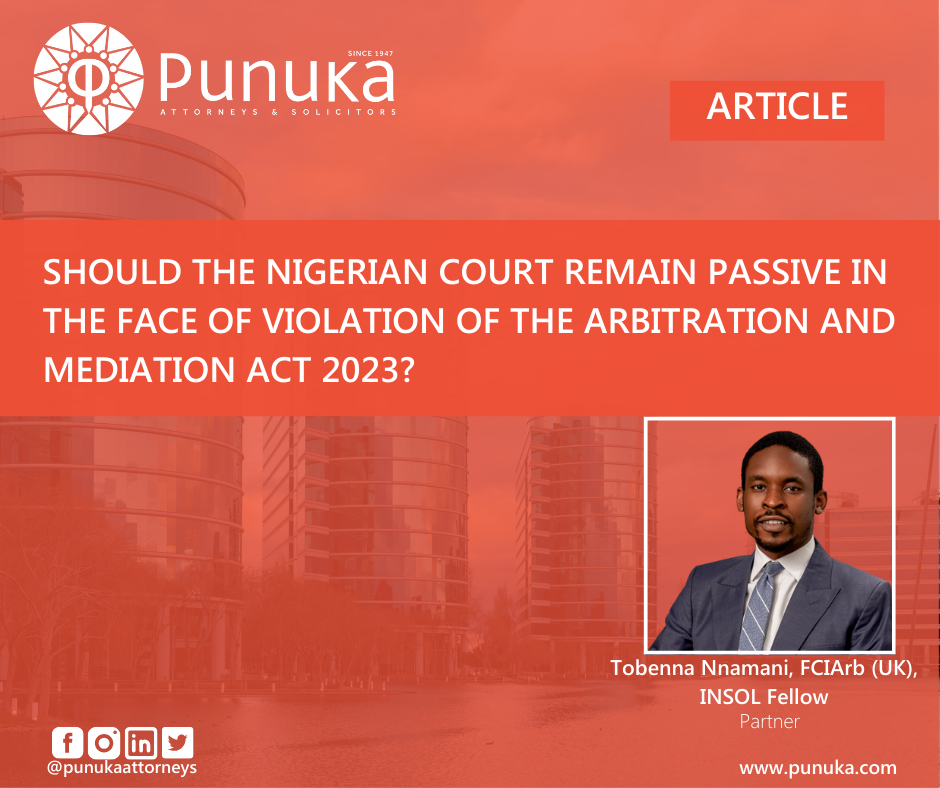
  • Should the Nigerian Court Remain Passive in the Face of Violation of the Arbitration and Mediation Act 2023?

    INTRODUCTION The parties executed a contract that has an arbitration agreement to resolve any dispute between same. During the arbitral proceedings, the Arbitral Tribunal issued Procedural Order 5 which allowed all the Respondent’s document requests and directed the Applicant to produce all the documents requested by the Respondent. However, the Arbitral Tribunal issued Procedural Order …

    More  →
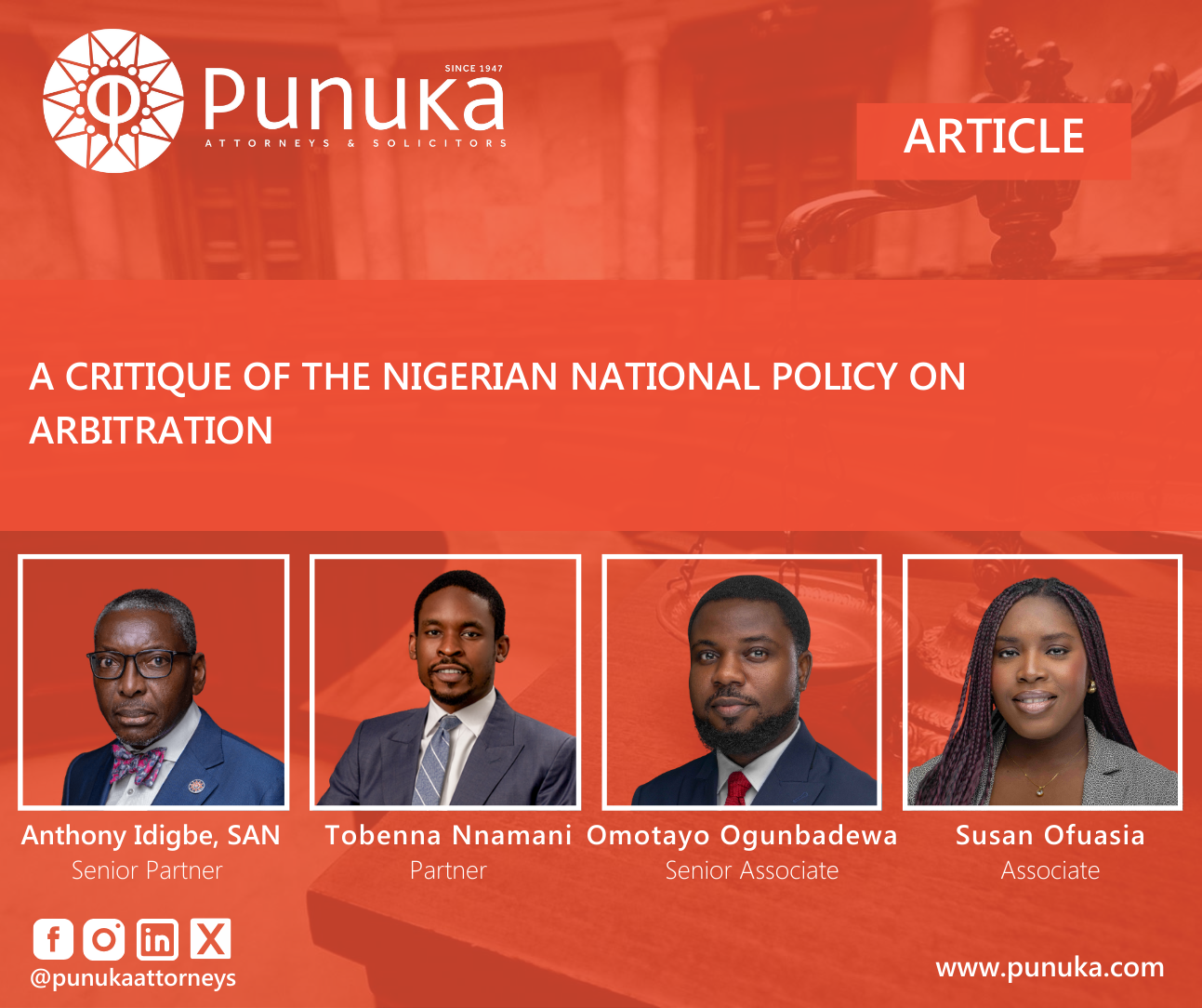
  • A Critique of the Nigerian National Policy on Arbitration

    Article By: Anthony Idigbe SAN, Tobenna Nnamani, Omotayo Ogunbadewa, Susan Ofuasia and Halimat Abdulsalam Introduction Nigeria has made significant strides in advancing itsdispute resolution landscape by introducing the National Policy on Arbitrationand Alternative Dispute Resolution (ADR) Policy.This initiative underscores the Federal Government’s commitment to fostering arobust, efficie Nigeria has made significant strides in advancing its dispute …

    More  →